
Click here or on the image above to download the workbook used during the Foreman’s GPS Leadership Workshop.
How can a “GPS Mindset” steer you to Sustainable success?
(G)row
Are you making decisions that help you grow, or are you choosing paths that will leave you stuck, confused, and frustrated?
(P)rotect
Are you protecting things that matter most—reputation, relationships, health—or are you wasting time, energy, and money protecting things that don’t move you closer to the goal line?
(S)ustain
Are you able to sustain momentum, or are you at risk of prematurely depleting your energy on short-term gains before you reach your long-term destination?
To be a sustainable leader, you must understand, connect, and revisit all 5 phases of the energy leadership lifecycle
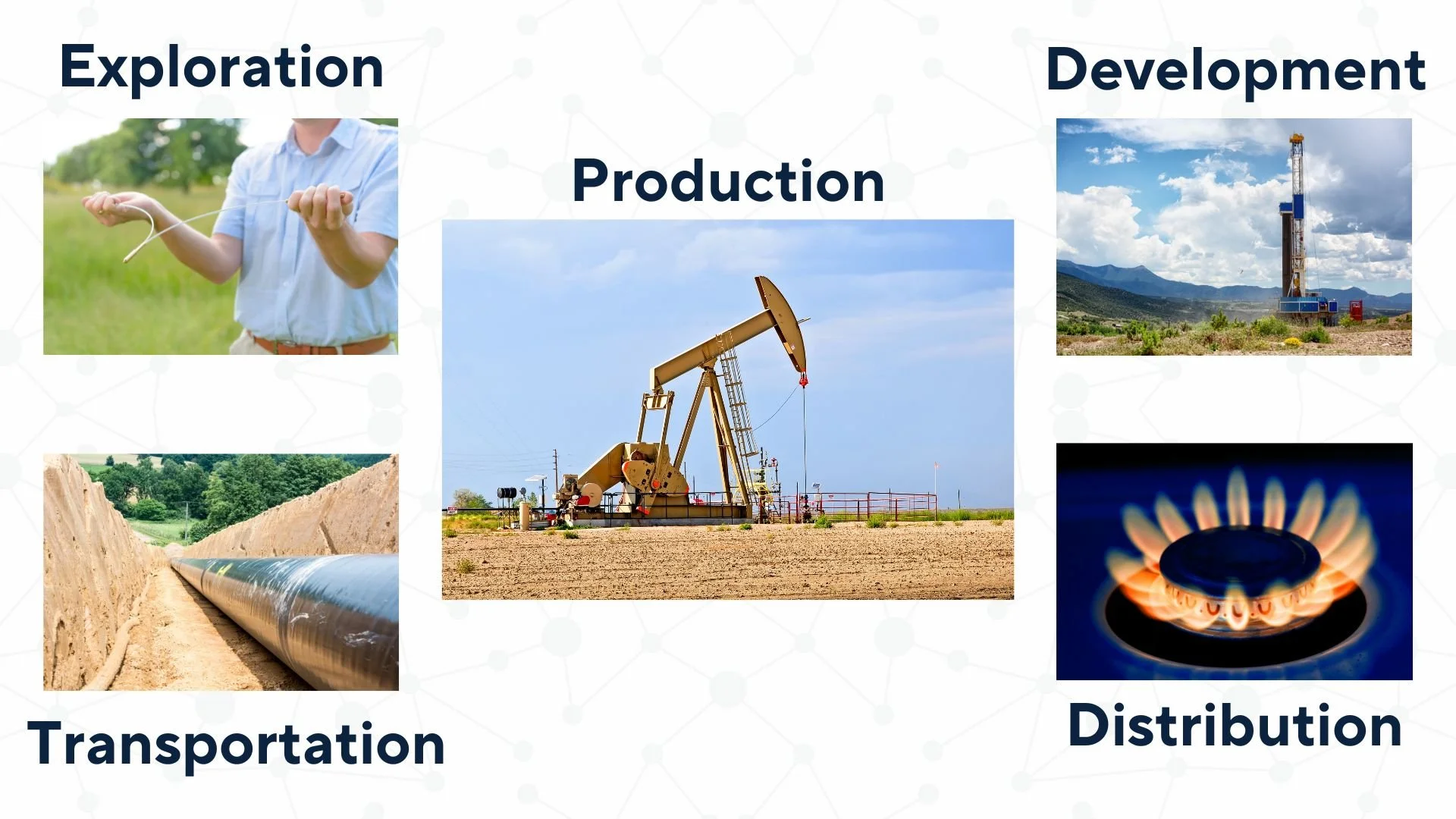
The better understanding you have of your leadership road map, the easier it is to make choices that will lead to sustainable success.
“I think life is a matter of choices and that wherever we are, good or bad, is because of choices we make.”
Phase 1: Exploration
Having a clear understanding of the ultimate destination you desire will do the following:
1) help you debunk unconscious assumptions you’ve been making about yourself;
2) help you debunk unconscious assumptions others have been making about you; and
3) filter every leadership decision you make through the understanding you develop in this step.
To hear an expanded discussion on the importance of clarifying your leadership identity, check out this 2-part series on The Energy Detox podcast:
Authentically Fraudulent: What an energy industry layoff taught me about purpose and passion

There’s one F-word that makes people shudder in corporate America, and it’s not the same one your grandmother might shake her finger at. The word is “fraud,” and embracing it now doesn’t mean you’re headed to jail. In fact, it could mean you’re headed to a much more satisfying and sustainable career.
Using a personal story of self-discovery, we explore how some layoff-induced reflection can determine whether you’ve been living a “fraudulent” existence, while asking challenging questions to make sure the labels you’re giving yourself or others don’t limit opportunities for future success.
How much does your title, your employer, or your industry define your identity?
This video further emphasizes the need to identify the core values & goals that are driving you forward so that you reduce the odds of suffering through individual, team, corporate, or industry-wide identity crises.
What is “Sustainability?”
Whether you’re talking about sustainable leadership strategies or sustainable development plans, you must first define what “sustainability” actually means, especially since hundreds of different definitions exist. To help you better understand and apply this buzzword, check out the episode of The Energy Detox linked here:

The writer H.L. Mencken once said, “For every complex problem, there is an answer that is clear, simple…and wrong.”
And with this idea in mind, one could argue that the KISS principle—which commands us to “keep it simple, stupid”—may not be enough to provide truly sustainable solutions to the many complex problems facing our planet and its nearly 8 billion inhabitants.
And when it comes to leading teams, families, and businesses, it’s unlikely that merely embracing simplicity is going to yield the sustainable success that you and your stakeholders desire.
So, in this episode of The Energy Detox, we propose a slight tweak to the KISS principle that encourages leaders to “keep it sustainable, stupid.”
Phase 2: Development
The good news:
You are likely surrounded by colleagues who genuinely want you to succeed.
The bad news:
Many of the same people who want you to succeed will not do a good job of holding you accountable.
The solution:
Find a reliable accountability partner who can help you 1) construct a leadership development strategy and 2) stick to the steps necessary to keep moving yourself and your team forward toward its ultimate destination. Whether that person is a friend, a co-worker, or a family member, make sure this person clearly understands his or her role as “coach.”
Effective coaching isn’t about “re-inventing the wheel” or “telling people what to do.” It’s about leveraging and improving upon existing resources so that individuals and teams can optimize performance
For a discussion on how you can employ a leadership coaching approach every day, check out this episode of The Energy Detox podcast:
A Trillion Dollar Crash and the Coaching Playbook That Will Fuel Energy’s Recovery

In this episode of The Energy Detox, you’ll jump into the shoes of a football coach whose team is losing by two touchdowns at half-time. And you’ll ask yourself whether you’re currently doing things that are helping your team recover from this deficit and emerge victorious…or whether you’re doing things that are more likely to have your star players checked out and thinking about the next game, the next season, or perhaps an entirely different sport.
This discussion is based upon the biography of Bill Campbell, a college football coach who transitioned into coaching some of Silicon Valley’s most successful leaders, as documented in Trillion Dollar Coach.
For a game plan that can help you be a more effective coach, hold others—and yourself—accountable, and ask better questions, check out: https://jeopardyfilter.com
Phase 3: Production
“What makes a decision great is not that it has a great outcome. A great decision is the result of a good process...”
To cut through subjective and potentially biased interpretations of your output—and, in turn, your value—channel the lessons former World Series of Poker champion Annie Duke shares in her book, Thinking in Bets.

The initial production results from an oil or gas well do not necessarily indicate the well’s long-term potential
Similarly, the results that you and your team produce may unwittingly lead your audience to reach faulty conclusions.
In energy, gambling, and life, results do NOT always speak for themselves
In this episode of The Energy Detox, you will hear many examples to support the recommendation that you should continually ask whether the results you and others produce—both good and bad—really speak for themselves:
Do the Results of Your Personal Booms and Busts Really Speak for Themselves?

At this point in your life, you are well aware that failures and mistakes are necessary building blocks for long-term success. You have countless experiences to prove that the “best laid plans…often go awry.” And you know that seemingly straightforward data can often be misleading and shouldn’t always be taken at face value.
So why do you instinctively assume that bad results mean that the decision that led to those results was also bad? Why does your embrace of “extreme ownership” and your “no excuses” attitude prevent you from acknowledging the fact that sound decisions sometimes lead to poor results?
In this episode of The Energy Detox, we encourage you to generate more confidence in your leadership and in the decision-making abilities of you and your stakeholders by keeping one question front and center: “Do the results speak for themselves?”
Phase 4: Transportation
When it comes to providing feedback, many managers are chickens
Because of this fact, you must be diligent about extracting valuable feedback. Whether you’re in a position to provide feedback or receive feedback, feed on the video below and ask yourself how corporate chickens are unwittingly stifling career development opportunities, morale, and employee engagement.
Being unable or unwilling to say “No” fuels unsustainable performance
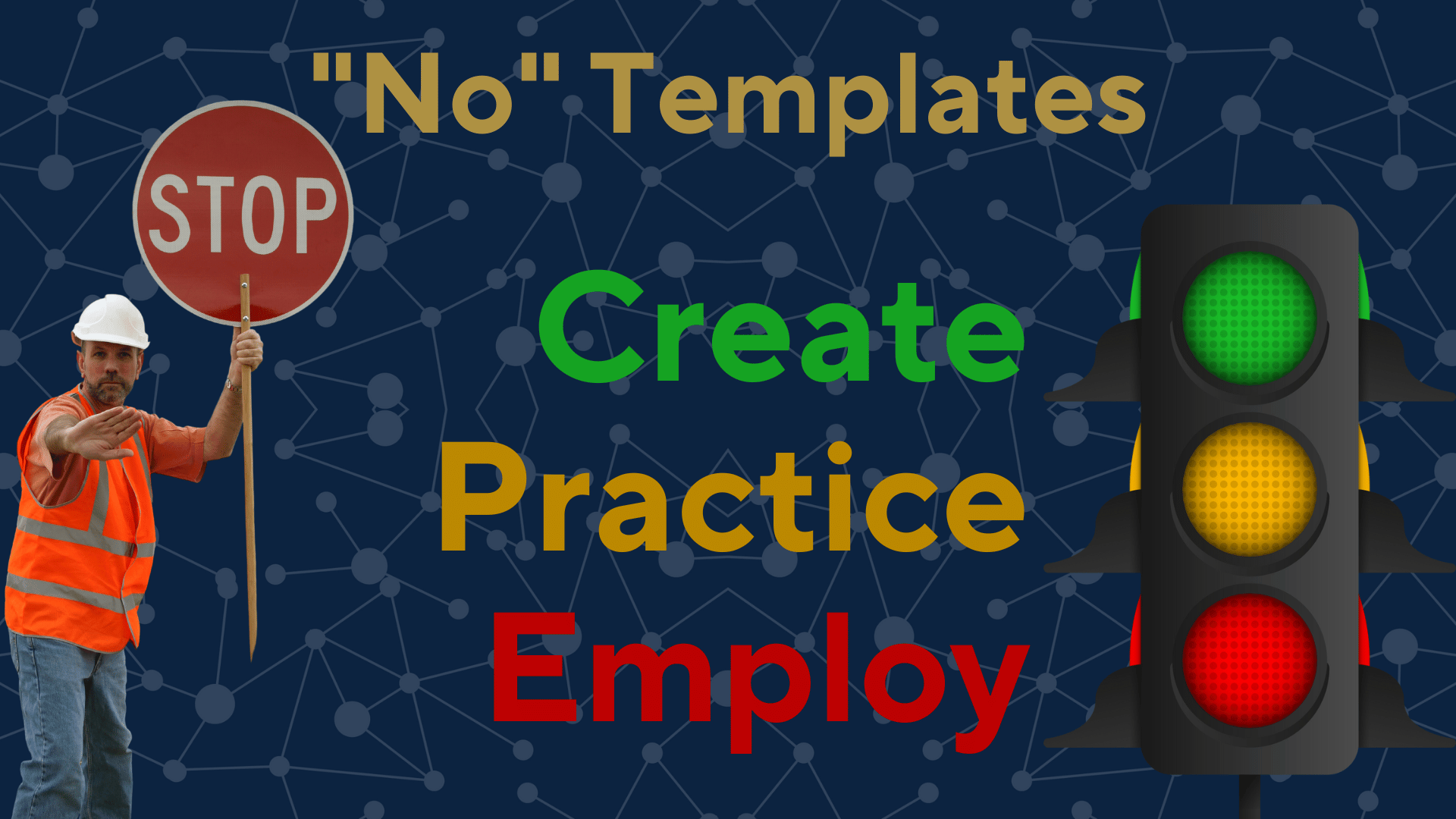
Being able and ready to say “No” in the moment—and in the right way—fuels confidence and trust. To become better at saying “No,” draft several different “No” templates that you can employ in various situations (i.e. saying no to a meeting or a project or an “opportunity” that would yield little to no value for you). Practice those templates and employ those templates to free yourself of the direct and indirect consequences that come from not being able to effectively say “No.”
Are you unwittingly confusing your stakeholders?
Understanding when you are either 1) failing to communicate your message to your intended audience or 2) communicating an unintended—and potentially toxic—message to that audience is often the difference between a focused team and a disengaged team.
And just as it’s important for pipelines to 1) have alternate paths so that flow can be maintained and 2) proactively avoid corrosion, so too must you have a dynamic communications strategy that recognizes times when you are unconsciously damaging your effectiveness, engagement, and/or reputation.
For more parallels between pipelines and communications strategies, check out this episode of The Energy Detox:
Top 5 Questions that Can Protect Your Communication Pipeline From Costly Attacks
If you thought the Colonial Pipeline attack was bad, just wait until you see how vulnerable your company’s communication pipeline is to leaks, corrosion, bottlenecks, and other potentially catastrophic threats.
And to help you identify those vulnerabilities, this episode of The Energy Detox will lay out the 5 most important communications-related questions you and other energy industry leaders need to ask so that you can:
1 - Eliminate corrosive communications—hidden problems that can lead to catastrophe
2 - Avoid dependence on “automated” communication strategies that can open you up to incidents far costlier than the Colonial cyberattack
3 - Re-route and think better on your feet instead of remaining over-reliant on a single (and often outdated) leadership communication pathway that is preventing you from reaching your stakeholders in a timely and effective manner
4 - Anticipate communications bottlenecks that will arise when your existing pipeline network can't handle the volume (or complexity) of the messages you're trying to share
5 - Reduce the odds of your audience declaring a dubious “force majeure incident” that can render your seemingly perfect communications plan even more useless than Colonial’s 5,500 miles of pipe were following the cyberattack
Phase 5: Distribution
If you work in the energy industry, you understand the realities of commodities: all else being equal, your product is worth the same as someone else’s product.
But how do YOU avoid being treated like a commodity amidst constant corporate consolidation and, in turn, increased competition?
How might you become a differentiated commodity?
If an oil and gas company paid 41% more to hire a certified “organic” CEO, you’d think the entire board had gone bananas, right?
Well, even though individual leaders may not (yet) have green “ESG-approved” labels placed on their foreheads, the reality is that consumers and investors are demanding that leaders prove their commitment to sustainability, even if doing so doesn’t materially change the way their company operates or the molecular structure of the product they sell.
And with more and more natural gas companies announcing that their product will be “certified,” it’s a good time to ask whether you—as either a CEO addressing mounting ESG pressures or as an employee who feels more and more like a commodity—are getting full credit for the things you’re ALREADY doing and maximizing the value of the investments you’ve ALREADY made before wasting time and energy pretending to be something you're not.
Cementing a Sustainable Reputation
Your most valuable career asset and bargaining chip is your reputation for increasing stakeholder value; if you want to avoid lamenting missed opportunities, then enhance and leverage that reputation by following the advice of energy industry leaders who help teams navigate industry volatility.
You can find such advice in this article from The Way Ahead, a publication of the Society of Petroleum Engineers:

For more information about Witting GPS and the benefits of conscious leadership coaching, please click here or reach out to Joe Sinnott.

